The Procedure
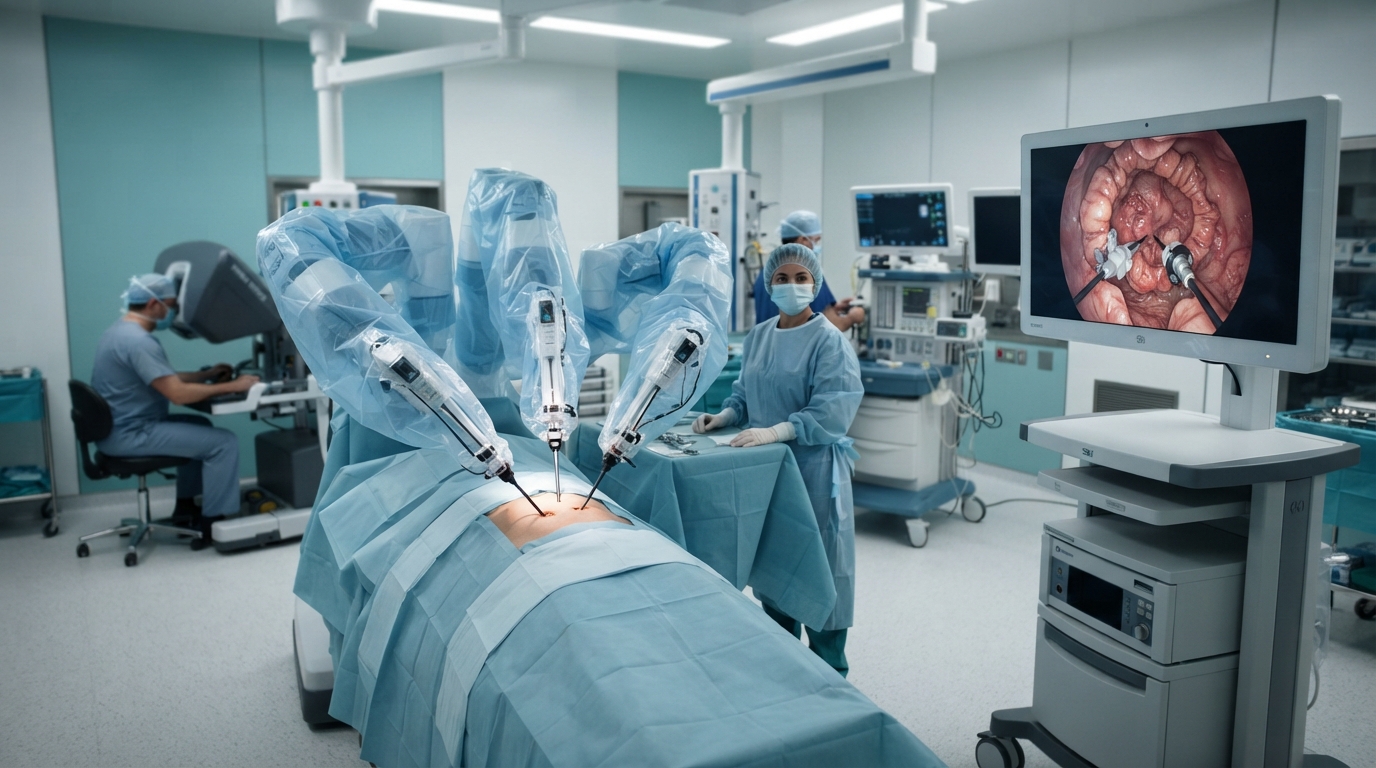
Instead of large abdominal incisions, the surgery is performed through a few small keyhole cuts using a robotic-assisted surgical system such as the SSI Mantra Surgical System.
Experience the pinnacle of surgical innovation at Novo Robotic Surgery Centre — minimally invasive precision for optimal recovery.
Precision
Sub-millimeter
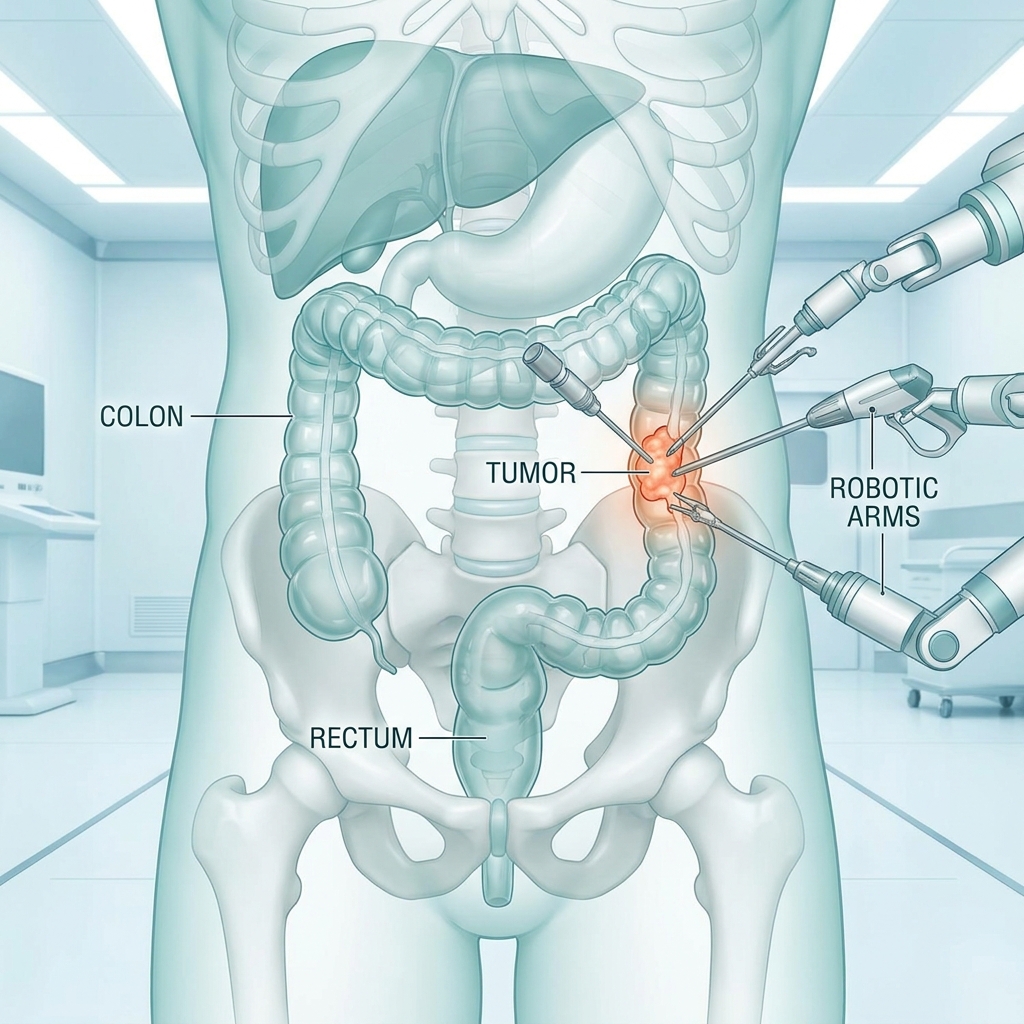
Colorectal cancer is a type of cancer that develops in the colon (large intestine) or rectum, which are important parts of the digestive system. Because colon cancer and rectal cancer share many similarities, they are commonly referred to together as colorectal cancer.
In most cases, colorectal cancer begins as small, noncancerous growths called polyps that develop on the inner lining of the colon or rectum. Over time, some polyps may turn into cancer if left untreated.
Early detection, timely colorectal cancer screening, and advanced treatment can significantly improve outcomes and help prevent the cancer from spreading.
Robotic colorectal cancer surgery is an advanced minimally invasive procedure used to treat colon cancer and rectal cancer with greater precision and safety.
Instead of large abdominal incisions, the surgery is performed through a few small keyhole cuts using a robotic-assisted surgical system such as the SSI Mantra Surgical System.
During the procedure, the surgeon controls robotic arms from a specialised console while viewing the surgical area through a high-definition 3D camera. The robotic system does not function independently — every movement is directed by the surgeon in real time.
This advanced robotic approach helps achieve safer cancer removal, reduced blood loss, less postoperative pain, faster recovery, and improved patient comfort compared to traditional open surgery.
Targeted robotic interventions for a comprehensive range of colorectal disorders.
Precision robotic surgery for effective colon tumor removal with faster recovery.
Advanced robotic procedures designed for accurate cancer removal and better functional preservation.
Minimally invasive robotic rectopexy to restore normal bowel anatomy and function.
Expert robotic treatment for diverticular disease, large polyps, strictures, and other colorectal disorders.
Patients may experience:
Persistent abdominal pain or cramping
Blood in stool
Changes in bowel habits
Constipation or diarrhea
Unexplained weight loss
Fatigue or weakness
Narrow stools
Rectal bleeding
Feeling of incomplete bowel emptying
The Ghaziabad-based Novo Robotic Surgery Centre, led by Dr. Vikrant Sharma, performs colorectal cancer surgeries using advanced robotic-assisted minimally invasive techniques.
The patient is placed under general anesthesia. The surgical team creates a few tiny keyhole incisions usually less than 1 centimeter in size in the abdomen. Specialized ports are inserted through these openings to provide access for robotic instruments.
The centre's modular robotic arm carts are carefully positioned and docked over the patient. Specialized robotic instruments, including an ultra-high-definition 3D camera, are attached to the robotic arms and inserted through the ports.
The surgeon controls the robotic system from a console using a magnified 3D view, allowing precise removal of the tumor and diseased section of the colon or rectum with enhanced accuracy and tremor-free movement.
Using advanced robotic precision, the cancerous bowel segment and nearby lymph nodes are carefully removed while protecting important blood vessels and nerves.
After removal of the cancerous tissue, the healthy remaining ends of the bowel are carefully reconnected using robotic suturing techniques. This process, known as anastomosis, restores normal digestive tract continuity.
Once the procedure is completed, the robotic arms are undocked and removed. The small abdominal incisions are closed using dissolvable sutures or surgical adhesive strips, resulting in minimal scarring.
Enhanced Surgical Precision
Minimally Invasive Approach
Better 3D Visualization
Reduced Blood Loss and Faster Recovery
Lower Risk of Complications
Minimally invasive robotic removal of a diseased or cancerous portion of the colon using enhanced precision, smaller incisions, reduced pain, and faster recovery.
Robotic removal of the right side of the colon, commonly performed for colon cancers, large polyps, or diseases affecting the ascending colon.
Advanced robotic surgery to remove the left side of the colon affected by tumors, diverticular disease, or other colorectal conditions.
Precise robotic removal of the sigmoid colon for conditions such as sigmoid colon cancer, diverticulitis, or recurrent bowel disease.
Specialized robotic rectal cancer surgery to remove the diseased rectum while preserving normal bowel continuity whenever possible.
Complex robotic surgery for very low rectal cancers involving removal of the rectum and anal canal when sphincter preservation is not feasible.
Minimally invasive robotic correction of rectal prolapse designed to restore normal anatomy and improve bowel function.
Most patients experience faster recovery compared to traditional open colorectal surgery. Minimally invasive robotic techniques, smaller incisions, early mobilisation, and effective pain management help support quicker healing, shorter hospital stay, and reduced risk of complications.
Recovery time may vary depending on the stage of colorectal cancer, the type of robotic surgery performed, and the patient's overall health condition. Most patients are able to return to normal daily activities sooner with improved comfort and better postoperative recovery.
At Novo Robotic Surgery Centre, we provide advanced robotic colorectal cancer surgery using minimally invasive technology combined with specialized surgical expertise. Our robotic systems offer enhanced precision, controlled movement, and high-definition 3D visualization, enabling surgeons to perform complex colon and rectal cancer procedures with exceptional accuracy while protecting surrounding nerves and tissues. Compared to traditional open surgery, robotic surgery typically results in smaller incisions, reduced pain, less blood loss, shorter hospital stays, and faster recovery. Every patient receives a personalized treatment plan based on the stage of cancer and overall health condition, ensuring safe, effective, and comprehensive colorectal cancer care from diagnosis to recovery.
Need Clarity
Answers to the questions patients ask us most about robotic colorectal cancer surgery.
Some cases are linked to inherited genetic conditions such as Lynch syndrome or Familial Adenomatous Polyposis (FAP), but most cases occur without a strong family history.
Yes. If detected early, colorectal cancer is highly treatable and often curable with appropriate treatment.
Treatment options include surgery, robotic surgery, chemotherapy, radiation therapy, immunotherapy, and targeted therapy.
Yes. It can spread to nearby lymph nodes, liver, lungs, or other organs if left untreated.
Yes. Many patients return to work and normal daily activities after successful treatment and recovery.
Most patients experience less pain than with open surgery because the procedure uses smaller incisions.