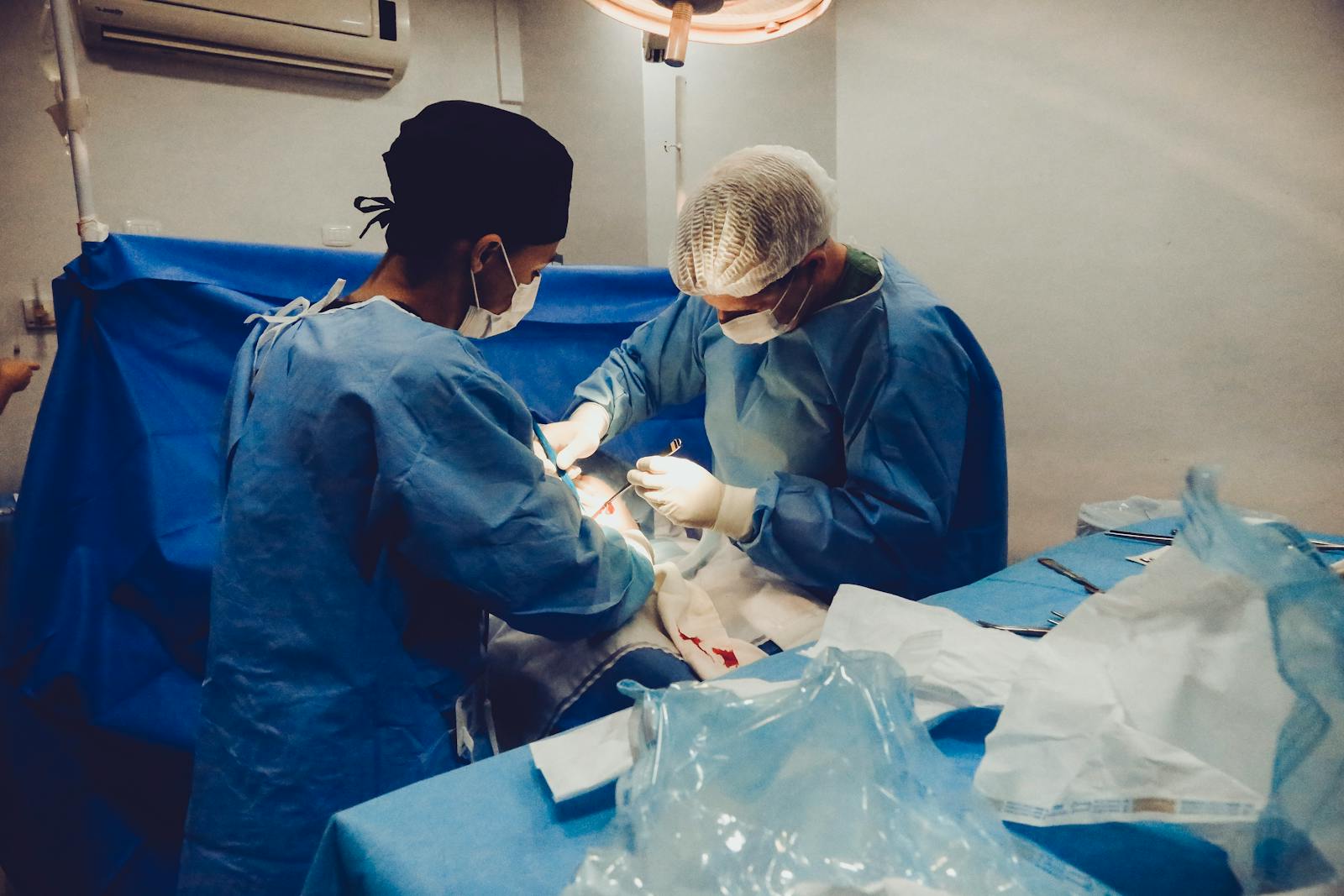
Understanding Benign Disorders of the Uterus and Ovaries:
Advanced Robotic Surgery in Kaushambi, Ghaziabad
Benign disorders of the uterus and ovaries are non-cancerous conditions that affect the female reproductive system. Although these conditions are not cancerous, they can significantly impact a woman's quality of life by causing pelvic pain, heavy or irregular menstrual bleeding, abdominal discomfort, infertility, or pressure on nearby organs.
Understanding Benign Reproductive Conditions
Common benign gynecological conditions include uterine fibroids, ovarian cysts, adenomyosis, endometriosis, and benign ovarian tumors.
Depending on the condition and its severity, treatment may range from medication and lifestyle modifications to advanced minimally invasive procedures such as robotic-assisted surgery.
Non-Cancerous
Non-cancerous conditions that affect the female reproductive system.
Quality of Life
Relieving pelvic pain, heavy bleeding, abdominal discomfort and pressure on nearby organs.
Common Benign Conditions of the Uterus and Ovaries
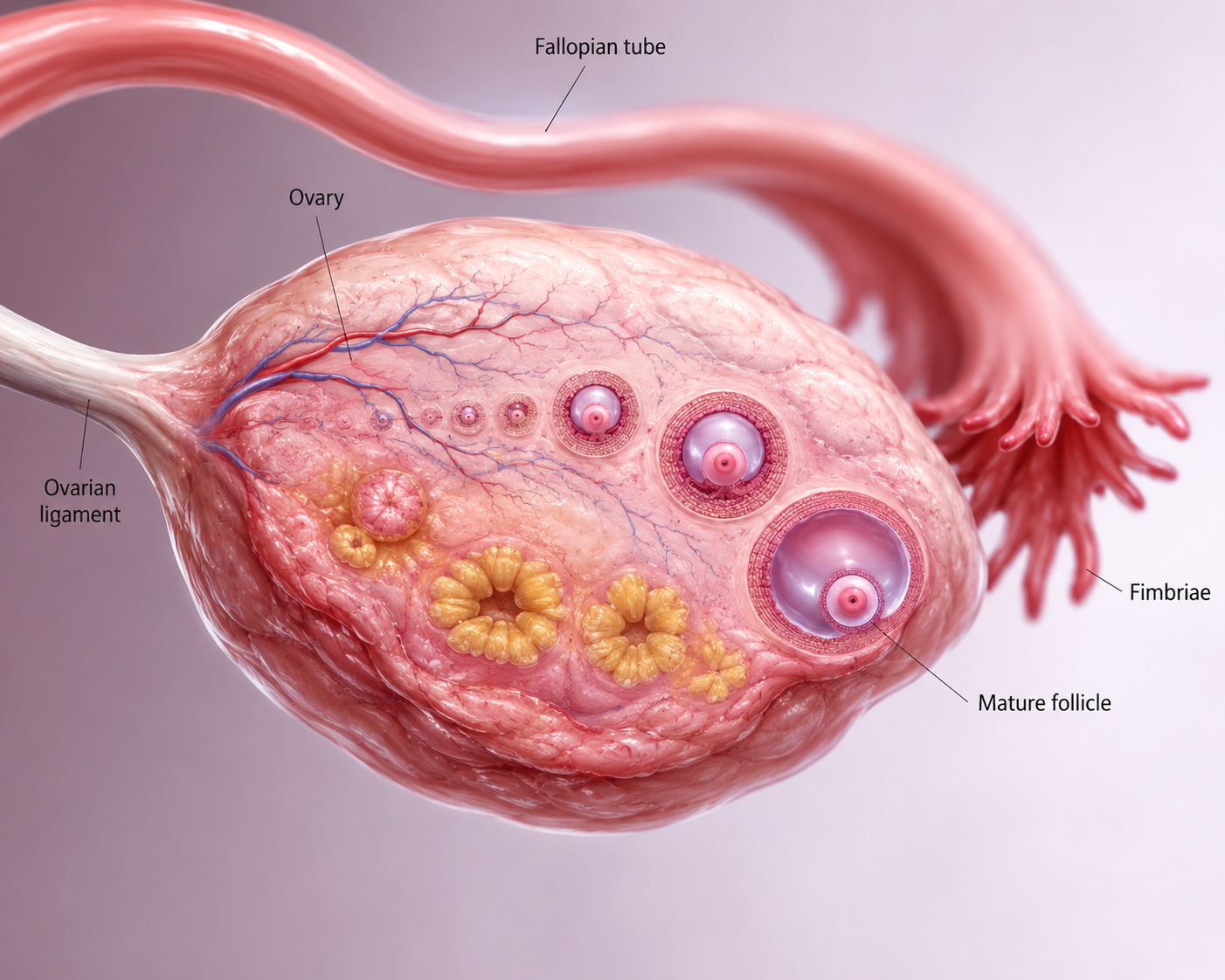
Anatomical Overview
Uterine Fibroids (Leiomyomas)
Fibroids are non-cancerous growths that develop within or on the muscular wall of the uterus. They may cause heavy menstrual bleeding, pelvic pressure, frequent urination, constipation, pain during intercourse, and fertility problems in some women.
Ovarian Cysts
Ovarian cysts are fluid-filled sacs that develop on or within the ovaries. While many cysts disappear naturally without treatment, larger or persistent cysts may cause pelvic pain, bloating, discomfort, or complications such as ovarian torsion, which requires immediate medical attention.
Endometriosis and Endometriomas
Endometriosis occurs when tissue similar to the uterine lining grows outside the uterus. It commonly affects the ovaries, fallopian tubes, and pelvic tissues, causing severe menstrual pain, chronic pelvic pain, painful intercourse, infertility, and ovarian cysts known as endometriomas.
Adenomyosis
Adenomyosis develops when the tissue lining the uterus grows into its muscular wall. This condition often results in heavy menstrual bleeding, severe menstrual cramps, chronic pelvic pain, and an enlarged, tender uterus.

When Is Surgery Recommended?
Many benign gynecological conditions can be managed with medications, hormonal therapy, or regular monitoring. However, surgery may be recommended when:
Symptoms significantly affect daily life.
Heavy bleeding leads to anemia.
Pelvic pain becomes persistent or severe.
Large fibroids or ovarian cysts continue to grow.
Fertility is affected.
Conservative treatments fail to provide adequate relief.
How Robotic Surgery Helps
Robotic-assisted gynecological surgery is an advanced form of minimally invasive surgery that allows surgeons to perform complex procedures through a few small incisions with exceptional precision.
The robotic system does not perform the surgery independently. Every movement is completely controlled by an experienced robotic surgeon, who operates from a high-definition console with magnified 3D visualization and specialized robotic instruments.
Surgeon Controlled
The robotic system does not perform the surgery independently.
Magnified 3D View
A high-definition console with magnified 3D visualization and specialized robotic instruments.
Common Robotic Gynecological Procedures
Robotic Myomectomy
Removes uterine fibroids while preserving the uterus, making it an excellent option for women who wish to maintain their fertility.
Robotic Ovarian Cystectomy
Removes ovarian cysts while preserving healthy ovarian tissue whenever possible, helping protect future reproductive function.
Robotic Hysterectomy
Removes the uterus, and when necessary, the cervix or ovaries, for conditions such as severe fibroids, adenomyosis, or chronic abnormal uterine bleeding.
Robotic Endometriosis Excision
Allows precise removal of endometriosis lesions and scar tissue, helping relieve chronic pain and improve fertility outcomes.
Recovery After Robotic Surgery
One of the greatest benefits of robotic-assisted surgery is faster recovery. Most patients experience less postoperative discomfort than with conventional open surgery and can begin walking on the same day of the procedure. Hospital stays are generally shorter, and many patients return to their normal daily activities much sooner, although heavy lifting should be avoided for approximately 4–6 weeks as advised by the surgeon.
Recovery varies depending on the procedure performed and the individual's overall health, so following your surgeon's postoperative instructions is essential.
Why Choose Novo Robotic Surgery Centre?
At Novo Robotic Surgery Centre, we combine advanced robotic technology with experienced surgical expertise to deliver safe, precise, and patient-Centreed care.
Our team is dedicated to providing personalized treatment plans for women with benign gynecological conditions, ensuring the best possible outcomes with minimal discomfort. We perform complex procedures with exceptional precision while preserving healthy tissue whenever possible.
If you are experiencing persistent pelvic pain, heavy menstrual bleeding, ovarian cysts, fibroids, or other benign gynecological conditions, consult our experts to determine whether robotic surgery is the right treatment option for you.
Consult our experts