Advanced Robotic Mini Gastric Bypass (MGB/SAGB)
Best Robotic Mini Gastric Bypass Surgery in Kaushambi, Ghaziabad
A life-changing, single-anastomosis procedure performed with robotic precision. Fewer connections, shorter operating time and a proven path to sustained metabolic health.
0.1mm
Surgical Precision
Understanding MGB/SAGB
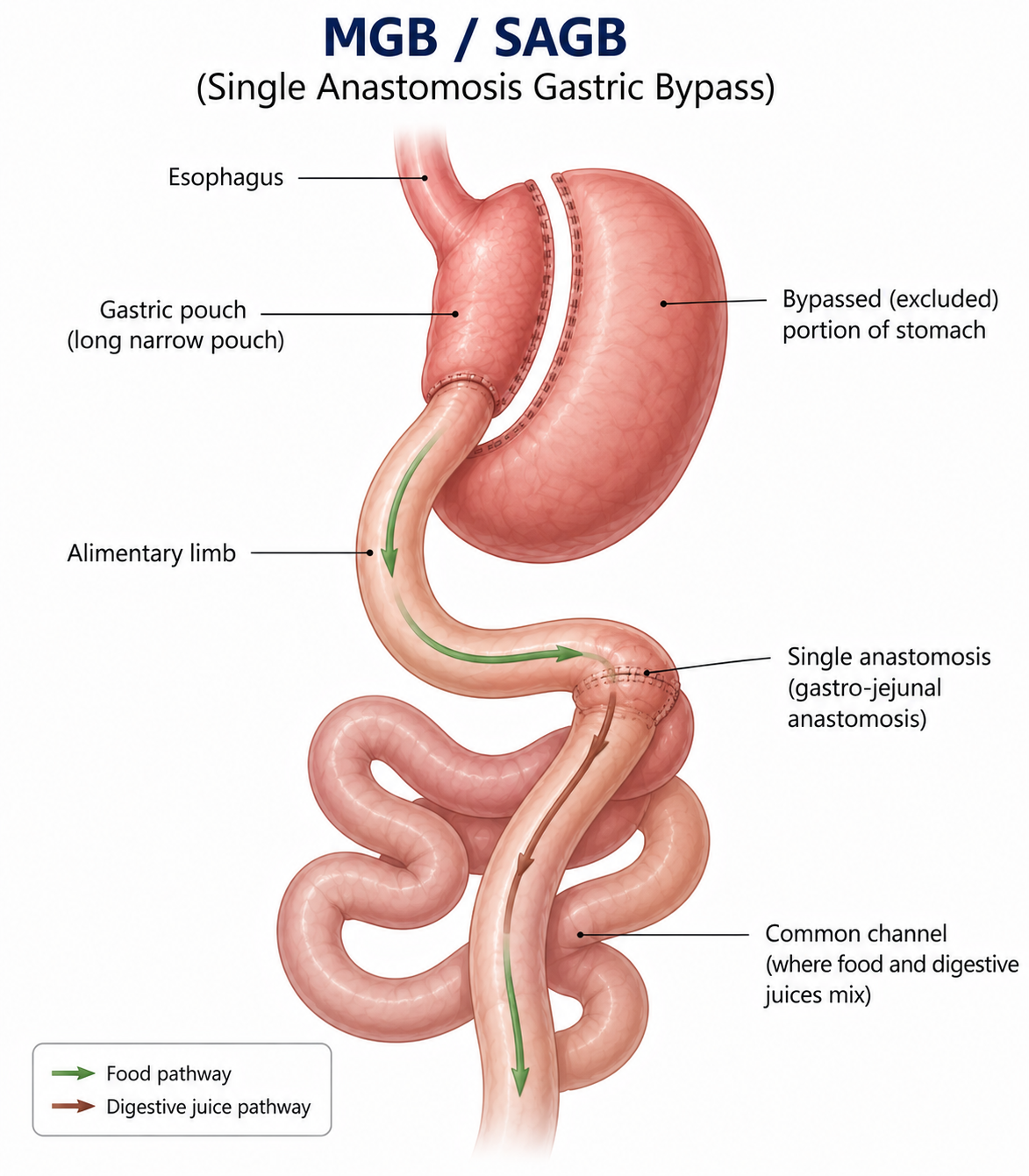
Mini Gastric Bypass (MGB), also known as Single Anastomosis Gastric Bypass (SAGB), is an advanced minimally invasive weight-loss surgery designed to help individuals struggling with severe obesity. The procedure works in two ways—by reducing the size of the stomach and rerouting a portion of the small intestine. This helps patients feel full with smaller meals and reduces calorie and nutrient absorption in a controlled manner, supporting long-term weight loss and metabolic improvement.
Mini Gastric Bypass (MGB) has become a widely accepted bariatric procedure globally due to its simplicity, effectiveness, and strong safety profile compared to traditional gastric bypass techniques.
- Reduced surgical time compared to RNY bypass
- Fewer internal connections, minimising leak risk
- Proven, reversible improvement of metabolic conditions
What is Robotic Mini Gastric Bypass Surgery?
01
Single Anastomosis
Robotic Mini Gastric Bypass Surgery is an advanced form of bariatric surgery performed using robotic-assisted technology. In this surgery, a small stomach pouch is created and connected to the lower part of the small intestine using a single connection (anastomosis). This reduces food intake and limits calorie absorption in a controlled manner, leading to effective and sustained weight loss.
Unlike traditional gastric bypass surgery, Mini Gastric Bypass requires only one intestinal connection (anastomosis), making the procedure technically simpler, less complex, and highly effective while maintaining a strong safety profile.
The robotic system provides surgeons with enhanced precision, superior control, and a high-definition 3D magnified view of the surgical area. This allows highly accurate and delicate movements during surgery, improving safety and overall surgical outcomes.
Robotic Mini Gastric Bypass is widely recognised as a safe and effective bariatric surgery for sustainable weight loss and improvement of obesity-related health conditions.
Are You an Ideal Candidate?
Precision healthcare starts with the right diagnosis. Evaluate your eligibility for robotic bariatric intervention.
BMI 35+
Suitable for individuals with a Body Mass Index of 35 or higher, or 30+ combined with obesity-related comorbidities.
Weight History
For those who have had unsuccessful attempts at weight loss through diet and exercise alone.
Metabolic Health
Highly effective for Type 2 Diabetes, hypertension and PCOD management.
Age 18–65
Ideally suited for patients between 18 and 65 years of age with stable health markers.
The Robotic Pathway
Anaesthesia & Incisions
The procedure is performed under general anaesthesia. The surgeon makes tiny keyhole incisions in the abdomen to insert the robotic instruments and a high-definition 3D camera.
Robotic System Setup
The robotic system is carefully positioned, allowing the surgeon to control the instruments with enhanced precision and flexibility, and to view the surgical area in magnified 3D throughout the procedure
Stomach Pouch Creation
Using advanced robotic stapling technology, the surgeon creates a long, narrow stomach pouch from the upper part of the stomach. This smaller pouch limits food intake and helps patients feel full sooner after meals.
The Bypass Connection
A section of the small intestine is brought up and connected directly to the new stomach pouch. This single connection (anastomosis) helps reduce calorie absorption while supporting effective and long-term weight loss.
Benefits of Robotic Mini Gastric Bypass Surgery?
Choosing robotic-assisted MGB means redefining your recovery and rewriting your surgical mastery.
98%
Patient Satisfaction Rate
Superior Precision
Eliminates human tremor and provides 10x magnification for exceptional accuracy.
Minimal Blood Loss
Small incisions and robotic-assisted dissection dramatically reduce intra-operative blood loss.
Faster Recovery
Most patients return to light activities within 10 to 14 days post-surgery.
Metabolic Revision
Rapid improvement in glycaemic control for Type 2 Diabetes patients.
Recovery & Diet After Robotic Mini Gastric Bypass Surgery
Recovery after Robotic Mini Gastric Bypass Surgery is generally faster due to the minimally invasive robotic approach. Most patients can return to light daily activities within a few days, although complete recovery may take a few weeks.
Initially, patients follow a liquid diet, gradually progressing to soft foods and then a regular, healthy diet as advised by the bariatric nutrition team.
Liquid Diet
Patients begin with a liquid diet immediately after surgery to allow healing and maintain hydration.
Soft Foods
The diet gradually progresses to soft foods as advised by the bariatric nutrition team.
Regular Healthy Diet
Patients transition to a regular, healthy diet with balanced, nutrient-dense portions.
Long-Term Success
Regular follow-ups, nutritional guidance, hydration, vitamin supplementation, and physical activity are key to lasting results after surgery.
Why Choose Novo Robotic Surgery Centre for Robotic Mini Gastric Bypass Surgery?
- High-definition 3D visualisation & enhanced instrument control
- Greater precision, less pain and minimal scarring
- Personalised nutrition, lifestyle counselling & long-term follow-up
When it comes to a life-changing procedure like Robotic Mini Gastric Bypass Surgery, choosing the right centre is essential. At Novo Robotic Surgery Centre in Kaushambi, Ghaziabad, robotic surgery is not just a service, it is our speciality. Our experienced robotic bariatric surgeons combine advanced surgical expertise with compassionate patient care to deliver safe, precise, and effective weight loss surgery.
Using the latest robotic technology, including high-definition 3D visualization and enhanced instrument control, we aim to provide greater precision, less pain, minimal scarring, and faster recovery. Beyond surgery, our dedicated team offers personalised treatment plans, nutritional guidance, lifestyle counselling, and long-term follow-up support to help patients achieve lasting weight loss success and improved overall health.
At Novo Robotic, we support your transformation every step of the way.
Book your consultation today at Novo Robotic Surgery Centre for advanced Robotic Mini Gastric Bypass Surgery and start your journey to a healthier life.
Book a consultationNeed Clarity
Frequently Asked Questions
Answers to the questions patients ask us most about Mini Gastric Bypass.
How is Mini Gastric Bypass different from Roux-en-Y Gastric Bypass?
Mini Gastric Bypass involves a single connection between the stomach and intestine, making the procedure less complex than Roux-en-Y Gastric Bypass, which requires two intestinal connections.
What foods should I avoid after a Mini Gastric Bypass?
Avoid carbonated drinks, fried foods, sugary desserts, processed snacks, and high-fat meals. These foods can interfere with weight loss and may cause digestive discomfort.
How much water should I drink after surgery?
Aim to drink 1.5–2 liters of water daily by taking small sips throughout the day. Avoid drinking during meals to prevent stomach discomfort.
When can I lift heavy weights after surgery?
Heavy lifting is generally avoided for 4–6 weeks after surgery. Your surgeon will advise you based on your recovery.
Can Mini Gastric Bypass help with PCOS?
Weight loss after Mini Gastric Bypass may improve hormone balance, menstrual regularity, and symptoms of Polycystic Ovary Syndrome (PCOS) in many women.
Can I drink alcohol after the Mini Gastric Bypass?
Alcohol should be avoided during the initial recovery period. After recovery, alcohol should only be consumed in moderation and after discussing it with your bariatric surgeon.
What happens if I don't follow the recommended diet?
Not following the prescribed diet may slow weight loss, increase the risk of nutritional deficiencies, cause digestive problems, or contribute to weight regain.
What is the success rate of Mini Gastric Bypass?
Mini Gastric Bypass has a high success rate when combined with healthy lifestyle changes. Most patients achieve significant and sustained weight loss while also experiencing improvement in obesity-related health conditions.