Precision Roux-en-Y Gastric Bypass (RYGB)
Best Robotic Roux-en-Y Gastric Bypass Surgery in Kaushambi, Ghaziabad
A gold-standard robotic procedure designed for sustainable weight loss and transformative metabolic improvement. Experience the pinnacle of surgical precision at Novo.
Contact a specialistUnderstanding RYGB
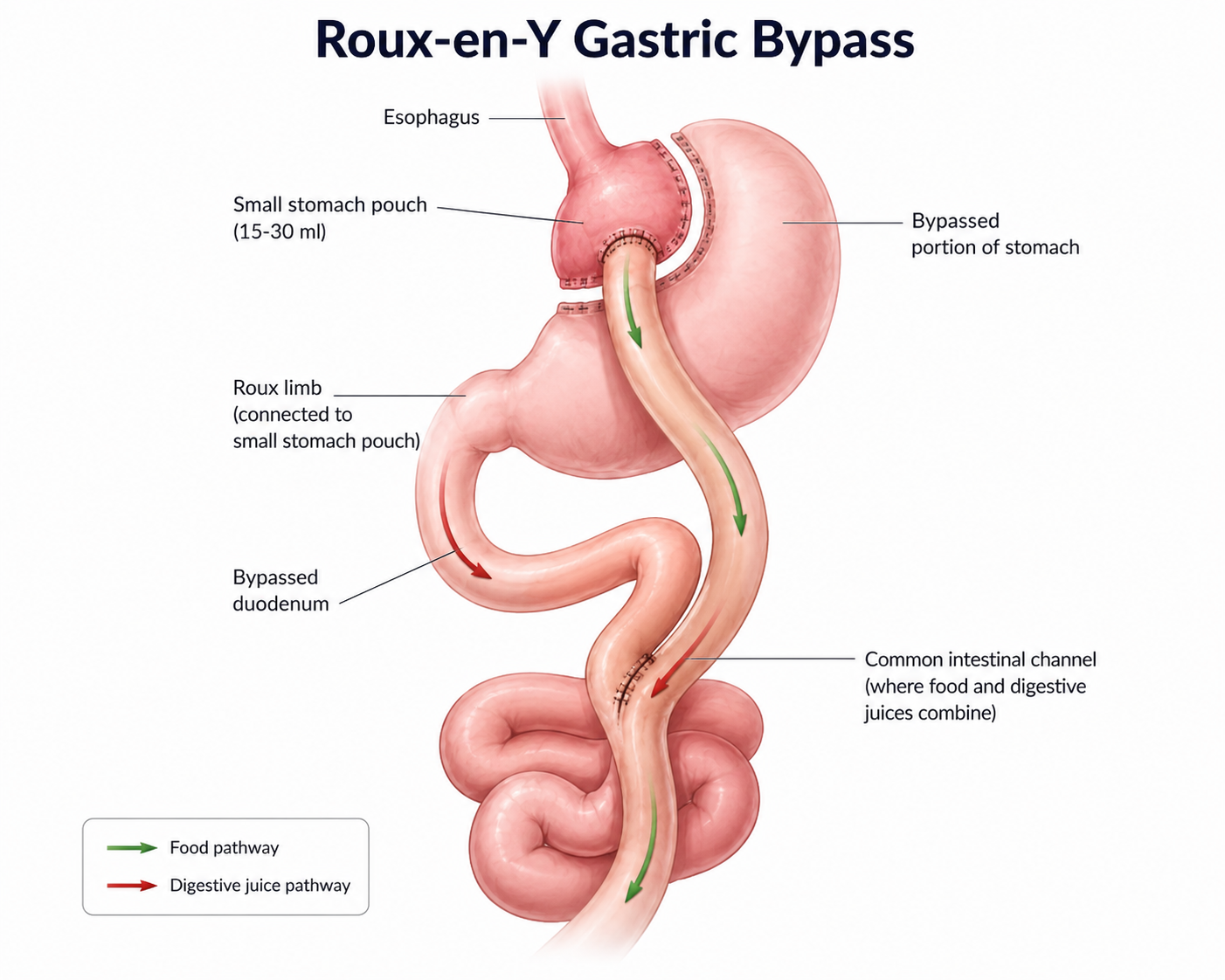
Roux-en-Y Gastric Bypass, commonly known as gastric bypass surgery, is one of the most effective bariatric procedures for long-term weight loss in people struggling with severe obesity and obesity-related health conditions. In this procedure, the stomach is made smaller and a portion of the small intestine is bypassed. This helps patients feel full after eating smaller meals while reducing calorie absorption.
Robotic Roux-en-Y Gastric Bypass not only supports significant weight loss but may also help improve obesity-related conditions such as type 2 diabetes, high blood pressure, sleep apnea, fatty liver disease, acid reflux, and joint pain. Gastric bypass surgery is often recommended for patients who have not achieved long-term weight loss through diet, exercise, or medications alone.
- Restrictive: Smaller pouch limits capacity
- Malabsorptive: Bypassing intestine reduces calorie uptake
- Metabolic: Positive changes in hunger hormones
Instrument Scale
0.1mm
What is the Robotic Roux-en-Y Gastric Bypass?
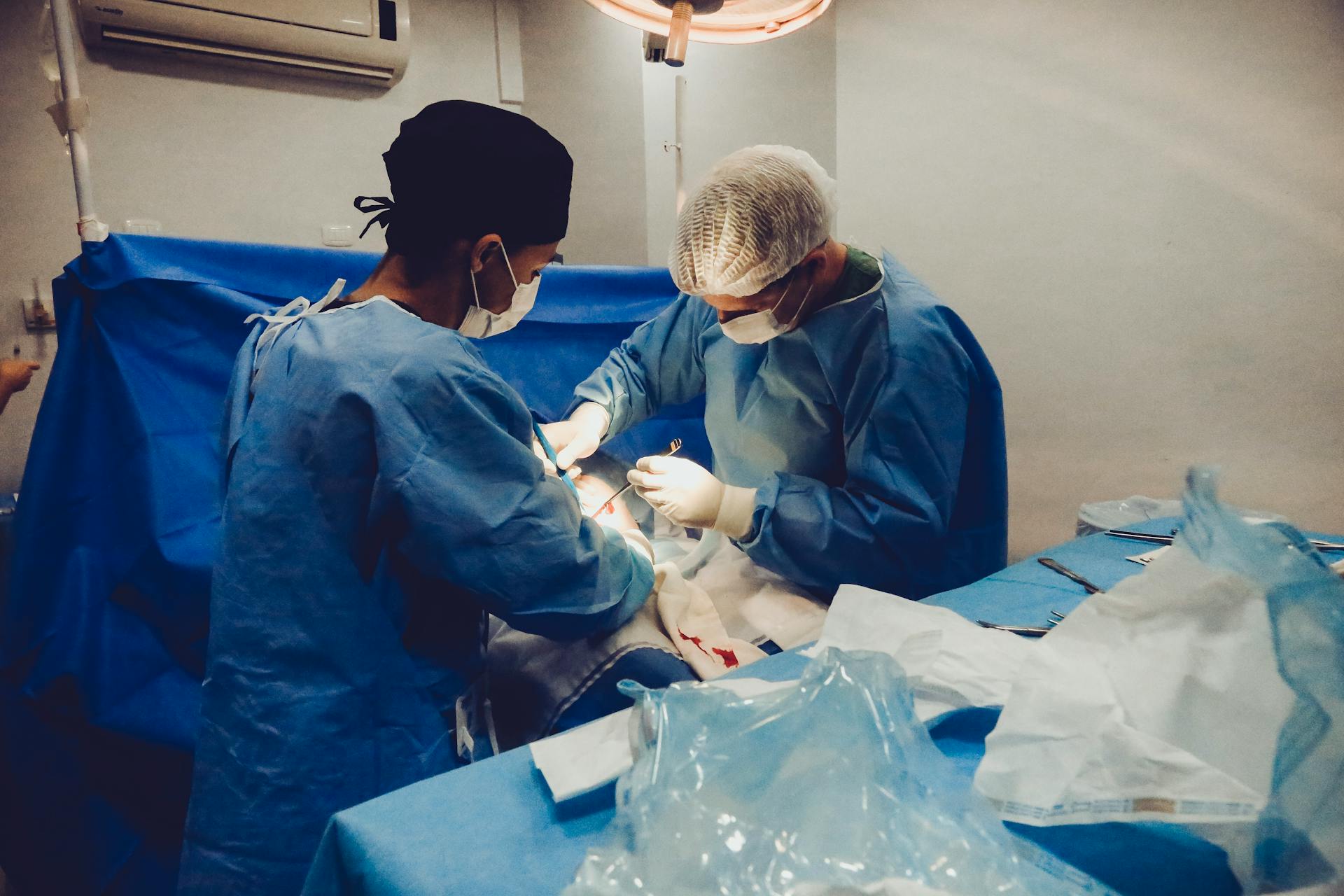
Robotic Roux-en-Y Gastric Bypass is an advanced form of bariatric surgery performed using robotic-assisted technology. During the procedure, the surgeon controls robotic instruments through a high-definition 3D console, allowing highly precise movements and improved surgical accuracy.
Robotic technology provides better vision, greater control, and enhanced precision, especially during complex weight loss procedures. Because it is a minimally invasive technique, patients usually experience smaller incisions, less pain, less blood loss, shorter hospital stay, and faster recovery compared to traditional open surgery.
At Novo Robotic Surgery Centre, advanced robotic technology is used to improve patient safety, surgical precision, and overall surgical outcomes.
Is RYGB Right for You?
We assess every patient based on clinical guidelines and long-term health potential.
BMI Metrics
BMI of 40+ or 35+ with obesity-related conditions like Type 2 Diabetes or hypertension.
Age Range
Typically recommended for adults between 18 and 65, evaluated on individual health status.
Commitment
Readiness to embrace lifelong nutritional guidelines and regular physical activity.
Who is an Ideal Candidate for Robotic Roux-en-Y Gastric Bypass Surgery?
Before undergoing gastric bypass surgery, every patient receives a detailed evaluation by our bariatric team. You may be an ideal candidate for Roux-en-Y Gastric Bypass if:
- Your BMI is 40 or above, or 35 and above with obesity-related conditions such as type 2 diabetes, high blood pressure, or sleep apnea
- You have tried to lose weight through diet, exercise, and lifestyle changes without long-term success
- You are between 18 and 65 years of age (patients outside this age group are evaluated individually)
- You are willing to commit to lifelong dietary changes, regular follow-ups, and a healthier lifestyle
- You are mentally and emotionally prepared for weight loss surgery
- You do not have untreated eating disorders or severe depression
- You are a non-smoker or willing to stop smoking at least 6 weeks before surgery
The Robotic Procedural Journey
Robotic Roux-en-Y Gastric Bypass surgery is performed under general anesthesia and usually takes around 90 to 120 minutes. The procedure uses advanced robotic-assisted technology that allows surgeons to perform complex bariatric surgery with greater precision, control, and enhanced visualization.
01
Small Incisions for Minimally Invasive Surgery
The surgeon makes 4–5 small keyhole incisions in the abdomen. Through these tiny openings, robotic instruments and a high-definition 3D camera are inserted, providing enhanced visibility and highly precise surgical movements.
02
Creating a Small Stomach Pouch
The upper portion of the stomach is divided using surgical staplers to create a small stomach pouch that can hold only a limited amount of food. The remaining part of the stomach stays in place and continues producing digestive juices.
03
Rerouting the Small Intestine
A portion of the small intestine is connected directly to the newly created stomach pouch. This allows food to bypass a part of the stomach and upper small intestine, helping reduce calorie absorption and support weight loss.
04
Forming the "Y" Connection
The bypassed section of the intestine is reconnected further down the digestive tract, creating the characteristic "Y" shape of the Roux-en-Y procedure. This allows digestive enzymes to mix with food for proper digestion and nutrient absorption.
05
Closure and Recovery
Once the procedure is completed, the small incisions are closed using sutures or surgical glue. Most patients are encouraged to start walking within a few hours after surgery, which helps improve blood circulation and supports faster recovery.
60–80% EWL
Average excess weight loss within the first 12 to 18 months.
Diabetes Control
Immediate improvement or remission of Type 2 Diabetes.
Minimal Scarring
Robotic ports result in scars smaller than 1 centimetre.
Faster Recovery
Return to normal activities significantly faster than open surgery.
Recovery After Robotic Roux-en-Y Gastric Bypass Surgery
One of the most common questions patients ask is, “How long will recovery take?” The good news is that robotic surgery usually allows faster recovery compared to traditional open surgery.
Hospital Stay
Most patients stay in the hospital for 1 to 2 days after surgery.
Diet Progression
Your diet will gradually progress from clear liquids to pureed foods, then soft foods, and eventually healthy regular meals as guided by your bariatric team.
Hydration Matters
Drinking enough water throughout the day is important to help prevent dehydration during recovery.
Activity & Return to Work
Most patients can return to light desk work within 1 to 2 weeks. Heavy lifting and strenuous physical activities are usually restricted for about 4 to 6 weeks.
Long-Term Nutrition Support
Daily vitamins and nutritional supplements are important to help your body absorb essential nutrients after gastric bypass surgery.
Follow-Up Visits
Regular follow-up appointments help monitor weight loss progress, nutrition, and overall recovery after surgery.
Why Choose Novo Robotic Surgery Centre for Robotic Roux-en-Y Gastric Bypass Surgery?
Choosing where to undergo weight loss surgery is a significant decision, and at Novo Robotic Surgery Centre, we understand the immense trust our patients place in us. Unlike general hospitals where bariatric procedures may only be performed occasionally, robotic surgery is our primary focus, and Roux-en-Y Gastric Bypass is one of the most commonly performed weight loss surgeries at our centre.
Our experienced bariatric surgeons use advanced robotic technology to perform gastric bypass surgery with enhanced precision, control, and safety. At Novo Robotic Surgery Centre, we provide comprehensive, patient-Centreed care, from detailed pre-operative evaluations and personalized treatment plans to nutritional guidance, post-operative care, and long-term weight management support.
We are committed to helping our patients achieve safe surgical outcomes, faster recovery, and sustainable weight loss results while providing compassionate care at every step of their journey.
Excess weight affecting your health and confidence? Our specialists at Novo Robotic Surgery Centre offer advanced Robotic Gastric Bypass Surgery to help you achieve effective, long-term weight loss with safer surgery and faster recovery.
Need Clarity
Frequently Asked Questions
Answers to the questions patients ask us most about Roux-en-Y gastric bypass.
How much weight can I lose after the Roux-en-Y gastric bypass?
Many patients lose 60–80% of their excess body weight within 12 to 18 months when they follow the recommended diet, exercise, and follow-up plan.
What foods can I eat after gastric bypass surgery?
Your diet progresses gradually from clear liquids to protein-rich liquids, soft foods, and then healthy solid foods. Our bariatric team will provide a detailed meal plan.
Are there any foods I should avoid after gastric bypass?
Yes. Sugary foods, carbonated drinks, fried foods, and high-fat meals should be limited, as they may cause discomfort, slow weight loss, or lead to dumping syndrome.
Is Roux-en-Y gastric bypass reversible?
Although reversal is possible in rare situations, Roux-en-Y gastric bypass is considered a permanent procedure and should be viewed as a long-term treatment for obesity.
Can I regain weight after gastric bypass surgery?
Weight regain can happen if healthy eating habits and regular physical activity are not maintained. Ongoing follow-up with your bariatric team helps support long-term success.