Gallbladder Adenocarcinoma
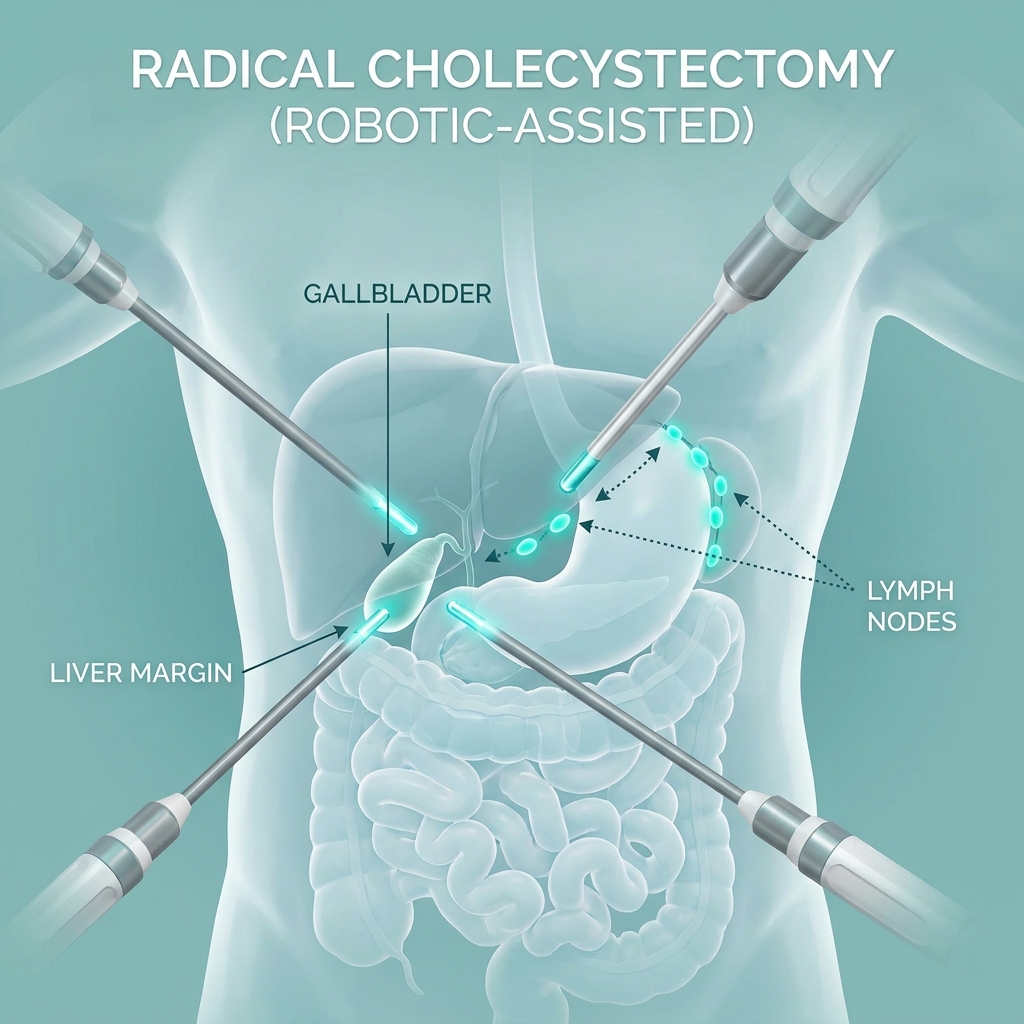
The most common type, arising from the glandular cells of the gallbladder lining. Robotic radical cholecystectomy removes the gallbladder along with adjacent liver tissue and regional lymph nodes.

Best Robotic Gall Bladder Cancer Surgery (Robotic Radical Cholecystectomy) in Kaushambi, Ghaziabad
Employing the world's most trusted robotic platform for unmatched precision in treating complex gallbladder and hepatobiliary cancers.
0.3mm
Surgical
Precision
Gallbladder cancer is uncommon but aggressive. It starts in the wall of the gallbladder and often causes no symptoms until it has spread into the liver bed or the surrounding bile ducts, which is why roughly two in three cases are found at an advanced stage.
A radical cholecystectomy goes further than a routine gallbladder removal. It takes the gallbladder, a wedge of adjacent liver tissue and the regional lymph nodes in one specimen, giving the pathologist a clear margin and the patient the best chance of long-term control.
Our specialised surgical oncology team handles complex hepatobiliary cases with high-risk anatomy.
The most common type, arising from the glandular cells of the gallbladder lining. Robotic radical cholecystectomy removes the gallbladder along with adjacent liver tissue and regional lymph nodes.
Large or impacted stones with repeated inflammation, where dense adhesions make conventional laparoscopy difficult. Wristed instruments allow safe dissection in a scarred field.
Long-term inflammation that thickens the gallbladder wall and raises the risk of malignant change. Early definitive surgery prevents progression.
Cancer discovered on the pathology report after a routine gallbladder removal. A completion radical resection, done early, changes the outcome — and we perform it robotically.
Early gallbladder cancer rarely announces itself. These signs are non-specific on their own, but together — or when they persist — they warrant imaging.
Abdominal Pain
Jaundice
Weight Loss
Loss of Appetite
Nausea & Vomiting
Abdominal Lump
Step by step, from first consultation to going home.
Radical Cholecystectomy
Robotic-Assisted
Imaging review, tumour markers and a staging discussion with the surgical oncology team.
CT and MRI reconstructions map the tumour, liver segments IVb/V and the vascular anatomy before the port plan is finalised.
Four to five keyhole ports, each 8 mm or smaller, replace the long open incision.
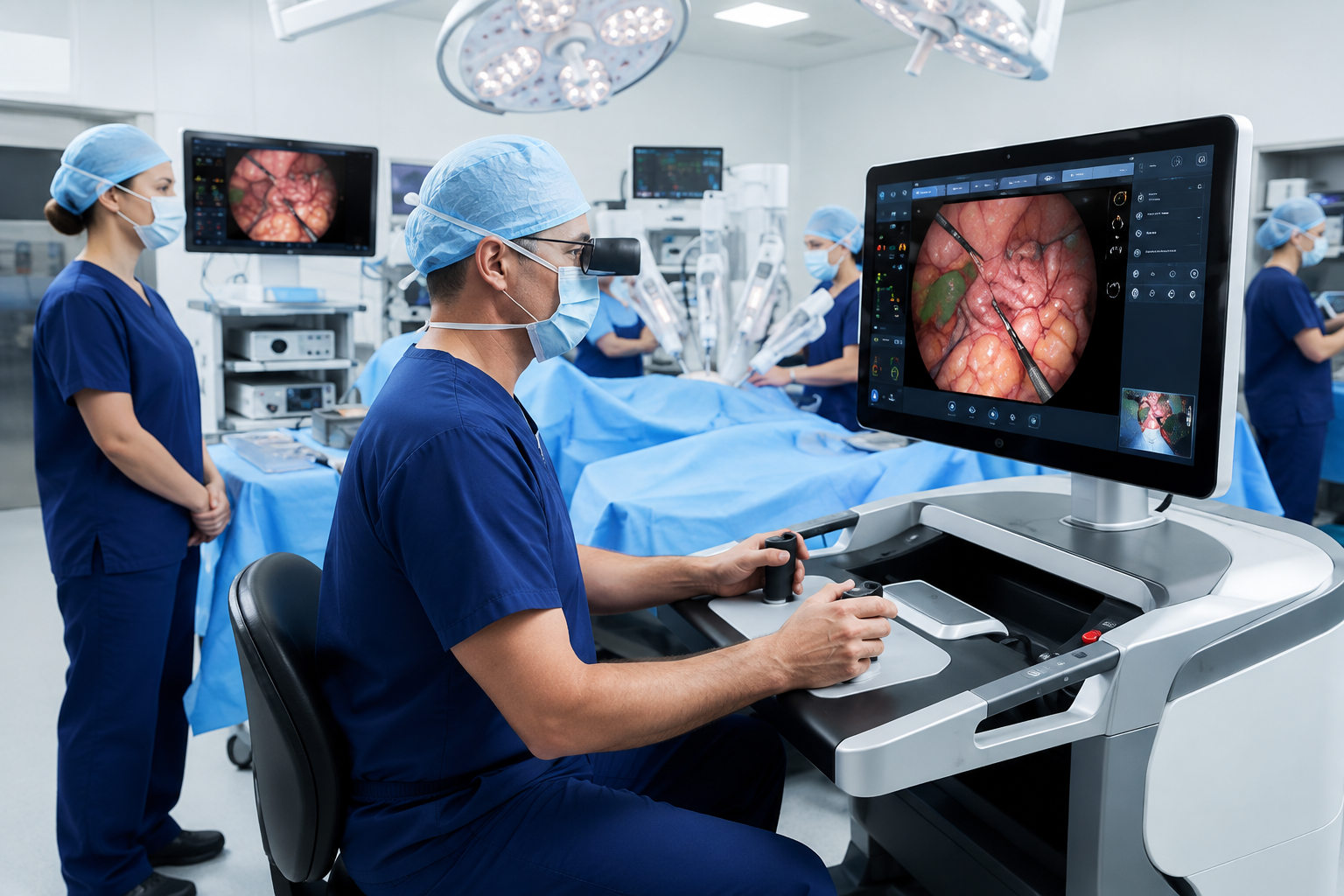
The surgeon docks the console, and 3D high-definition vision with 10x magnification takes over from direct sight.
En-bloc resection of the gallbladder with a liver wedge and a full portal lymphadenectomy.
Most patients are mobile within 24 hours and discharged in 2 to 3 days.
Redefining the standard of hepatobiliary oncology.
Ten-times magnified stereoscopic vision reveals tissue planes and small vessels the naked eye misses.
Precise dissection and controlled energy use typically keep intra-operative loss under 100 ml.
Smaller incisions mean less pain and a quicker return to work and daily routine.
Wristed instruments reach the hepatoduodenal ligament for a complete lymph node harvest.
A closed, minimally handled field lowers the rate of surgical site infection.
The system filters natural hand tremor, so every movement at the tissue is steady.
Specialised Expertise
A dedicated GI and hepatobiliary oncology team with high-volume robotic experience.
SSI Mantra Technology
India's first indigenous surgical robotic system, with multi-arm precision and open console ergonomics.
Holistic Oncology Support
Nutrition, pain management, physiotherapy and counselling run alongside the surgical plan.
Send your reports and our surgical oncology team will review them and call you back within one working day.
+91 (800) NOVO-SURGERY